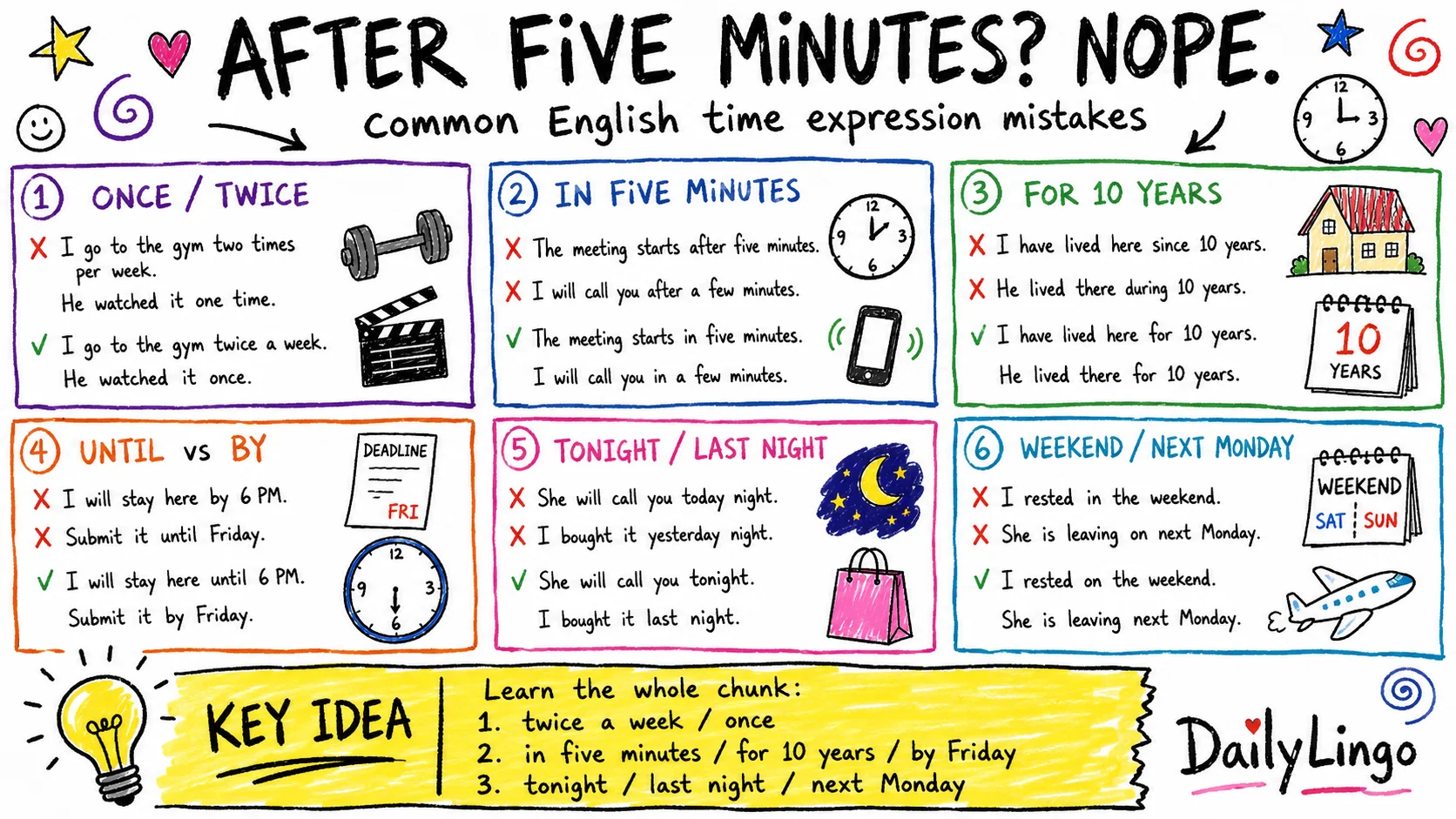
“The meeting starts after five minutes.” 회의 시작을 알리려다 이렇게 말하면 원어민은 잠깐 멈칫합니다. 한국어로는 “5분 후에”가 자연스러운데, 영어에서 이 자리에 after를 넣으면 어색해요. 시간 표현은 한국어를 그대로 옮기다 어긋나는 대표 구역입니다.
빈도, 미래 시점, 기간, 마감 — 자주 꼬이는 네 가지를 순서대로 정리했습니다.
횟수와 빈도 — twice, a week
“두 번”은 two times도 말은 되지만, 원어민은 twice를 훨씬 자주 씁니다. “한 번”도 one time보다 once가 더 자연스럽고 간결해요. 둘 다 틀린 표현은 아니고, 그냥 입에 더 잘 붙는 쪽이 따로 있는 겁니다. three부터는 three times처럼 times를 쓰고요. 빈도를 말할 땐 per week보다 a week가 훨씬 자연스럽습니다.
-
△ I go to the gym two times per week. (틀리진 않지만 덜 자연스러움)
-
✅ I go to the gym twice a week.
-
△ He has watched that movie one time. (통하긴 하지만 once가 더 매끄러움)
-
✅ He has watched that movie once.
다만 three time처럼 수 일치를 놓치면 그건 진짜 오류예요. two/three 같은 복수 앞에서는 반드시 times입니다.
- ❌ We go to the gym three time a week.
- ✅ We go to the gym three times a week.
“몇 달에 한 번”처럼 간격을 말할 땐 once per가 아니라 once every를 씁니다.
- ❌ I visit my parents once per three months.
- ✅ I visit my parents once every three months.
”~후에”는 after가 아니라 in
지금을 기준으로 “얼마 뒤에”라고 미래를 가리킬 땐 after가 아니라 in입니다. after는 “어떤 사건 다음에”라는 뜻이라, 기준 사건 없이 시간만 던지면 어색해져요.
-
❌ I will call you after a few minutes.
-
✅ I will call you in a few minutes.
-
❌ The meeting starts after five minutes.
-
✅ The meeting starts in five minutes.
“지금부터 2주 후에 보자”를 two weeks later로 말하기 쉬운데, 이건 기준이 “지금”이라 in two weeks가 맞아요. 핵심은 기준점입니다. 현재를 기준으로 셀 땐 in, 이미 말해둔 과거나 미래의 어떤 시점 뒤를 가리킬 땐 later예요.
- ❌ We will meet two weeks later. (기준 시점 없이 “지금부터 2주 후” 뜻이면 틀림)
- ✅ We will meet in two weeks.
반대로 앞에 기준 시점이 깔려 있으면 later가 오히려 맞습니다. “그가 도착하고 2주 뒤에”처럼요.
- ✅ He arrived in May. We met two weeks later. (도착 = 기준점, 그 뒤 2주)
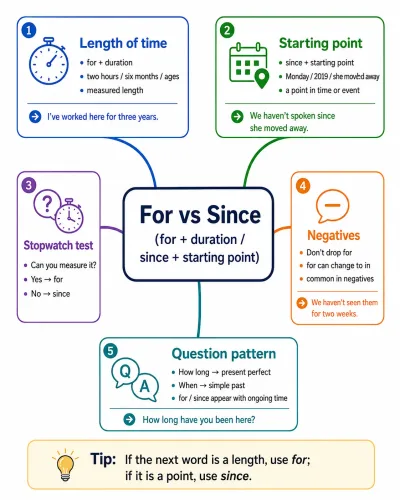
기간은 for — since·during과 헷갈리지 않기
“10년 동안”처럼 얼마나 오래인지(기간)를 말할 땐 for입니다. since는 “~부터”라는 시작 시점에 쓰고, during은 “방학 동안”처럼 특정 사건·기간 명사 앞에 써요.
-
❌ I have lived here since 10 years.
-
✅ I have lived here for 10 years.
-
❌ He lived there during 10 years.
-
✅ He lived there for 10 years.
정리하면 for 10 years(기간), since 2016(시작점), during the vacation(사건). 숫자로 된 길이 앞에서는 거의 for라고 보면 됩니다.
이 두 단어만 깊게 파고든 for와 since 차이도 따로 있습니다. 부정문에서 for를 못 빼는 것, How long 질문에서 시제가 갈리는 것까지 다뤘어요.
by vs until — 둘 다 “까지”인데 다른 말
이 둘이 가장 많이 엉킵니다. 한국어로는 똑같이 “~까지”지만, until은 그 시점까지 계속, by는 그 시점 전까지 한 번 끝내기(마감)예요.
-
❌ I will stay here by 6 PM.
-
✅ I will stay here until 6 PM. (6시까지 머무는 행동이 이어짐)
-
❌ Please submit your application until Friday.
-
✅ Please submit your application by Friday. (금요일 전까지 제출만 완료하면 됨)
구분 팁 하나. stay, wait, work처럼 쭉 이어지는 행동엔 until, submit, finish, send처럼 한 번에 끝나는 행동엔 by를 떠올리세요.
this morning, tonight, last night
“오늘 아침”, “오늘 밤”, “어젯밤”을 한국어 어순대로 옮기면 today morning, today night, yesterday night이 되는데 전부 틀립니다. 영어엔 정해진 덩어리 표현이 있어요.
-
❌ I will meet him at today morning.
-
✅ I will meet him this morning.
-
❌ She will call you today night.
-
✅ She will call you tonight.
-
❌ I bought a bag yesterday night.
-
✅ I bought a bag last night.
this morning / this afternoon / tonight / last night — 통째로 외워두면 매번 헷갈릴 일이 없습니다.
주말엔 on, next 앞엔 전치사 빼기
“주말에”는 in the weekend가 아닙니다. 주말 전치사는 미국식이 on the weekend / over the weekend, 영국식이 at the weekend예요. 전치사를 고쳐도 한 가지 남는 게 있는데, took a rest라는 표현 자체가 원어민 귀엔 살짝 어색합니다. rested over the weekend나 took a break over the weekend가 훨씬 자연스러워요. 그리고 next Monday, last week처럼 next·last가 붙으면 앞에 전치사를 쓰지 않아요.
-
❌ I took a rest in the weekend. (전치사 in + took a rest 둘 다 어색)
-
✅ I rested over the weekend. / I took a break over the weekend.
-
❌ She is going to France on next Monday.
-
✅ She is going to France next Monday.
한눈 정리
| 상황 | 덜 자연스럽거나 틀린 표현 | 더 자연스러운 표현 |
|---|---|---|
| 횟수 | two times / one time (△ 통함) | twice / once |
| 빈도 | per week | a week |
| 지금부터 ~후 | after five minutes | in five minutes |
| 미래 시점 + 후 | two weeks later (기준 시점 없을 때) | in two weeks |
| 기간 | since 10 years | for 10 years |
| ~까지 계속 | stay by 6 PM | stay until 6 PM |
| 마감 시한 | submit until Friday | submit by Friday |
| 오늘 밤 / 어젯밤 | today night / yesterday night | tonight / last night |
| 주말에 쉬다 | took a rest in the weekend | rested over the weekend |
규칙이 하나로 안 묶이는 게 시간 표현의 함정입니다. in five minutes, for 10 years, by Friday처럼 숫자·요일과 전치사를 한 덩어리로 입에 붙이는 게 제일 빠릅니다.
다음에 약속을 잡을 때 “in ten minutes”, “by Friday” 중 어느 쪽이 맞는지 한 번만 짚어보면, 그게 진짜 연습이에요. 비슷한 실수 모음은 한국인이 자주 틀리는 영어에서 함께 볼 수 있습니다.